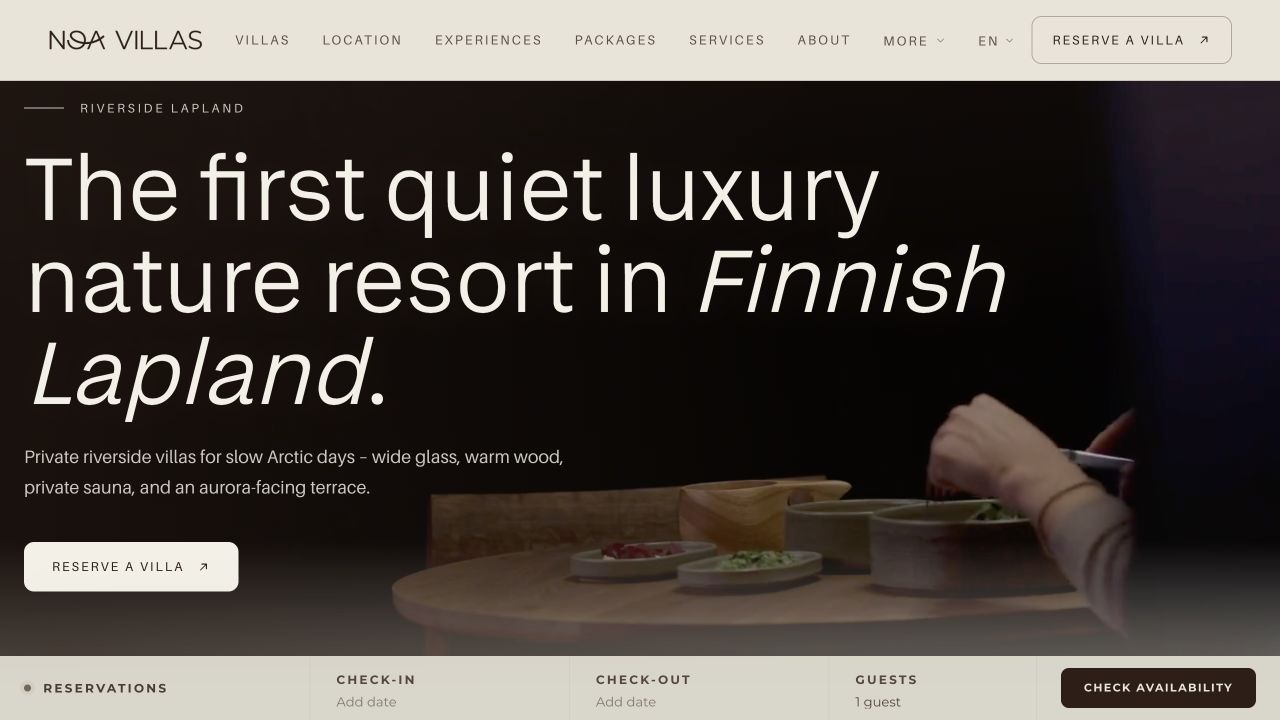
NOA Villas
Hospitality · FinlandWebsite design and WordPress development for a villa destination in Lapland. Give the place room to speak. Give the visitor a clear way to explore it.
Visit websiteWebsites. WordPress. Automation.
SMOKING HOTAnother workshop about your “why”? Or a website that helps someone work out what to buy, and why from you.
Two working demos. Try both. Choose a direction. Then WordPress, integrations, and launch. A decision before the big commitment.
Fine. Show the work.Selected work
Website design and WordPress development for a villa destination in Lapland. Give the place room to speak. Give the visitor a clear way to explore it.
Visit website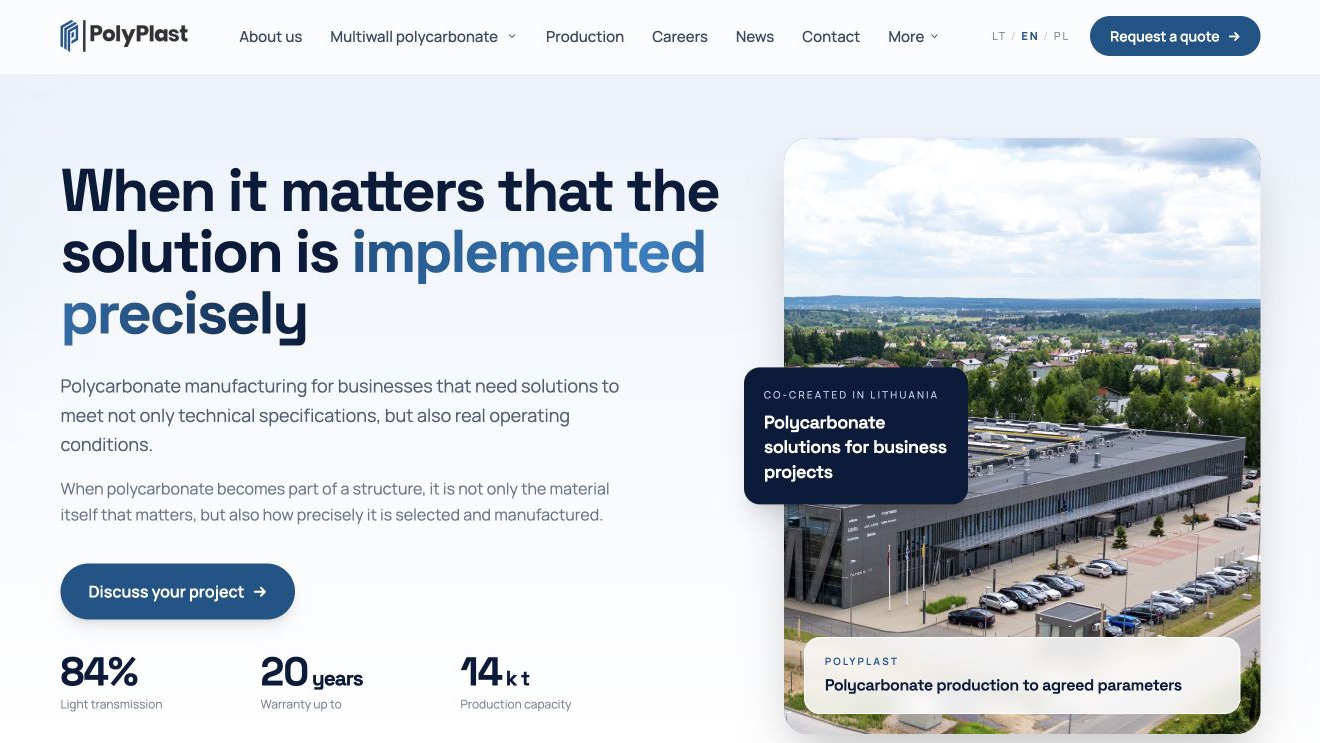
Website design and WordPress development for a polycarbonate manufacturer. Technical products deserve a better explanation than a download called final_FINAL_v7.pdf.
Visit website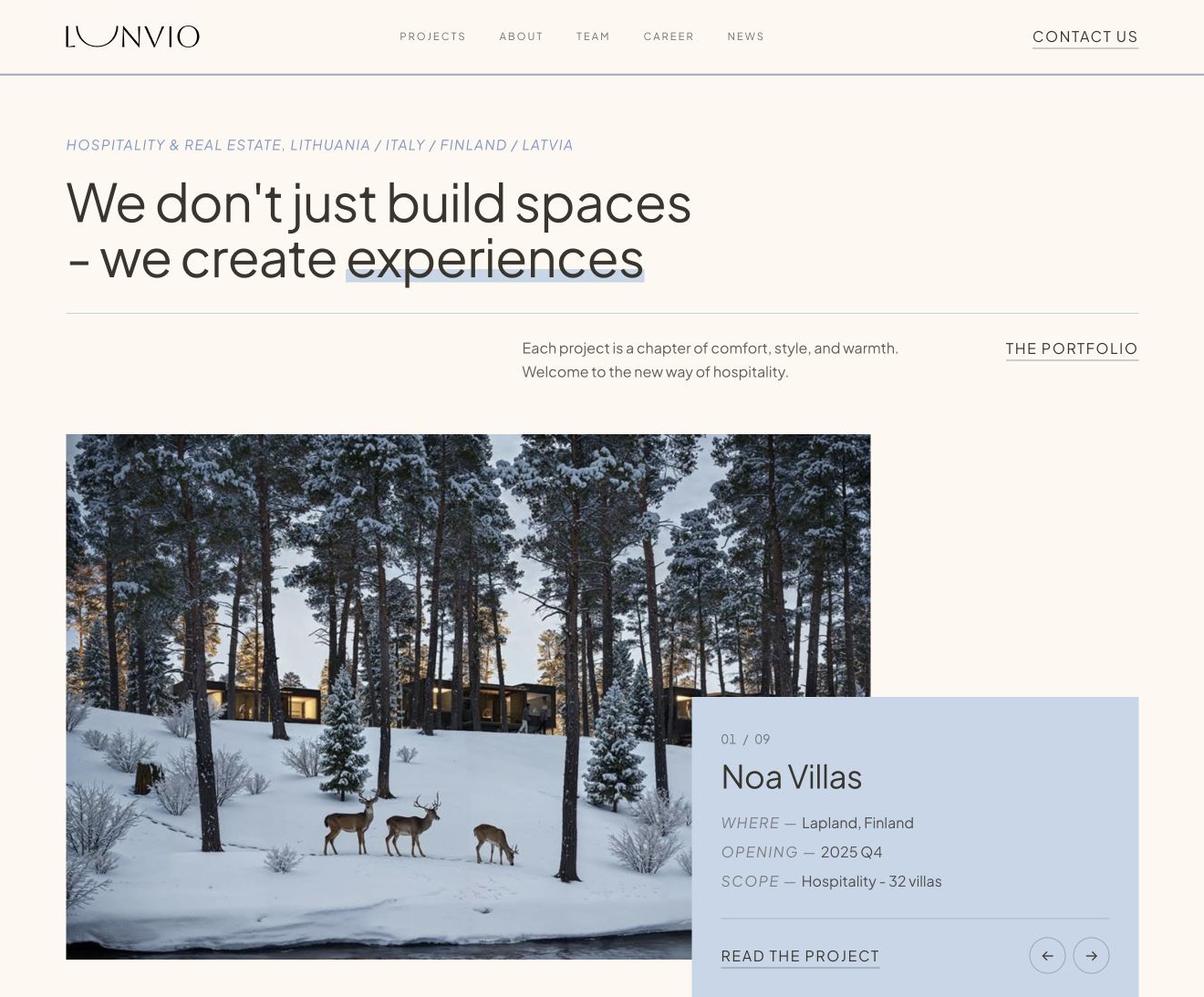
Website design and WordPress development for a hospitality and real estate group. Projects across four countries, with individual stories and a portfolio you can actually navigate.
Visit websiteTry before choosing
Neither is your partner’s opinion of the font. Two working demos put something more useful on the table: what a visitor can actually find, understand and do.
The same agreed content, two different approaches to structure and design. Open the menu. Find a service. Try both on your phone. “I just prefer this one” is a starting point. You will be asked why.
We choose a direction and refine it through the agreed revision rounds. Bring the brand book if you have one. Bring feedback that describes a problem. “Make it pop” will be returned to sender.
The same brief. Two different approaches.
Different structure and presentation
Agreed pages and user journeys
Your existing brand book
You explore. We compare. You choose.
Working means: clickable navigation and agreed interactions on desktop, tablet and mobile. These are front-end previews. WordPress editing, live forms, bookings, payments and other agreed integrations are built and tested in the final website phase.
The process
“We need something fresh” tells us nothing. Explain the offer, the customer and what is failing. We review content, the current site, the brand book and required connections. The brief is allowed to be questioned.
Two front-end demos on your own devices. Follow the customer’s journey before convening a tribunal about the shade of green.
Gather the feedback. Resolve the internal arguments. Agree the structure and design. We build websites; we do not referee your management team.
The chosen direction becomes a WordPress site with content management and the agreed integrations. New ideas can be discussed. They do not become free by arriving in a message labelled “tiny change”.
Content, links, forms and mobile behaviour get checked. The site launches with a handover for everyday edits. Perfectionism is welcome until it becomes a sophisticated excuse for never publishing.
Pages, languages, functionality, content responsibilities, revision rounds, migration, price and launch: agreed before work starts. Existing URLs and third-party costs belong in that conversation too.
A typical website takes one to three weeks once the scope is agreed and the necessary material is ready. Integrations, content and approvals affect the schedule. The date is confirmed against the actual job, rather than pulled from a motivational poster.
WordPress care
Your website has not become self-sustaining because you stopped opening it. WordPress care covers core, theme and plugin updates, backups and checks of the functions people actually use.
We agree the routine, response arrangements and any allowance for content changes or small improvements. Bigger work gets its own scope. Existing sites are welcome after a review. “Nothing has broken yet” is a description of the past.
About website carePractical AI & automation
If the process is “ask Dave, unless Sarah disagrees, then wait”, you have a management problem with excellent potential for an expensive chatbot.
Here is a task with a point: a manufacturer receives an enquiry with three attachments and missing specifications. An assistant gathers the facts, flags the gaps and drafts follow-up questions. A person checks, decides and sends. The time saved after review is what counts.
Bring real examples and a clear result. We test rules for predictable work, AI for reading and drafting, and agents where connected steps justify one. Checking, corrections and running costs stay in the calculation. If the useful answer is “delete that step”, you will hear it.
Where automation can helpOne possible workflow
An email and a product specification.
Summary, missing details, draft reply.
Checks the facts, decides and sends.
Start with one useful task.
Other services
You want something “premium, disruptive, but like the competitor’s”. That’s three problems. None of them is a design brief.
Your customers came to buy, not admire the CEO’s favourite animation. Shopify, WooCommerce and other platforms built around the catalogue, checkout, payments, delivery and daily operations.
Read this first“Make it pop” is not a brief. Show what needs explaining. Process animations, instructional videos, brochures and spatial visualisations from photographs, with the actual product kept recognisable.
Read this first“Just let it handle everything” is how you delegate being disappointed. Start with one defined routine, the right connections, explicit permissions and a handover you can use.
Read this firstCMO in the headline. LiMA in the bio. Twelve posts about authenticity. Wonderful. Why should anyone buy the thing? Positioning, offers, landing pages and campaign material for a question your job title cannot answer.
Read this firstThe studio position
You know the business. We question the website. Neither side gets a ceremonial veto over common sense. A worthwhile problem, a sensible budget and someone who can make a decision: start there.
MortalityStudio designs websites, builds them in WordPress and puts automation where it earns its place. If you need every idea applauded, there are entire agencies staffed for that.

Too introverted to show his face.
Does other stuff.
A few useful answers
An awkward sentence can cost less to fix than an awkward website. First, look at what people fail to understand or find. If the offer is buried, better structure and copy may be enough. If the site is difficult to maintain or the business has outgrown it, rebuilding makes sense. The diagnosis should not mysteriously require the most expensive treatment every time.
Give both demos the same job: find a service, answer a real customer question and get in touch. Try it on a phone. Notice where the route is obvious and where you hesitate. Taste still matters, but it gets some evidence to argue with. Two demos give us a comparison; they do not magically replace research with your actual customers.
Then we need useful feedback, not a polite yes. Is the offer wrong, the tone off, the structure confusing, or something missing? We refine a direction through the agreed revision rounds. Parts of both can work together if the result stays coherent. A changed brief is possible too; the extra work and cost are agreed before it starts.
Enough real material to understand the business, yes. A perfect content folder, no. Existing pages, brochures, photographs and recurring customer questions give us a start. We agree who writes, translates and approves the rest. Bring a brand book if you have one. Final content still needs a deadline: a layout built around imaginary sentences eventually sends someone a bill.
Distinct layouts, languages, content work, integrations and migration all affect the job. Twenty similar product pages may be simpler than three unusually demanding ones. The proposal separates the build from hosting, domain renewal, paid plugins, external services and optional care. You should be able to understand the cost after launch without enrolling in a course on agency invoicing.
Missing content, missing access and five people giving contradictory feedback. The timeline starts with an agreed scope and the necessary material ready. We identify one person who can approve decisions and collect comments together. New requirements can move the date; that is discussed before adding them. A calendar cannot negotiate with a photograph that has not been taken.
The move is planned before anything live changes. We check domain, hosting and email arrangements, identify existing pages worth keeping and map changed addresses. The new site can be prepared while the old one stays available. Email is a separate service, not collateral damage. Any necessary changes to it are agreed explicitly, alongside the actual switch and checks afterwards.
Research should answer a real uncertainty. If nobody knows why customers abandon a booking, watch them try to book. If the menu is unreadable on a phone, fix the menu. Interviews, prototypes and usability checks can be valuable. A wall of sticky notes is not valuable by the square metre. Agree the question before buying the ceremony.
Usually that is a question about the specific system, not a yes on a sales call. We check its connections, permissions, fees and the visitor’s route. A clear link may do the job; a deeper integration may be worth the work. Demos show the agreed journey. Live bookings, payments and data exchange are connected and tested during the final build.
Everyday edits shape the WordPress setup: prices, photographs, service text or new projects. The handover covers those tasks and the agreed administrator access, hosting, source files and licensed components. Another developer should have a clear starting point. Staying should be a choice made because the working relationship is useful, not because nobody can find the password.
Anything without a clear job or someone to maintain it. Start with the offer, the questions customers ask before buying and a clear next step. A blog nobody will write is a future apology, not a launch requirement. Extra languages and elaborate features can follow when justified. The proposal can separate the useful first release from the things that need more evidence.
Define a useful outcome before building: a relevant enquiry, a booking or a question answered without a phone call. After launch, look at actual enquiries, customer feedback and appropriately configured analytics together. A busy chart can hide a quiet inbox. The website can make a decision easier, but demand, pricing and service still belong to the business. Sales guarantees would be theatre.